



AI has revolutionized how companies operate, offering innovative solutions for efficiency, decision-making, and customer engagement. But with great power comes great responsibility. Without a clear AI policy, businesses risk ethical breaches, legal challenges, and loss of trust among stakeholders. From data privacy violations to biased algorithms, the misuse of AI can harm more than just reputation — it can derail progress entirely.
A well-defined AI policy ensures your business operates responsibly and ethically, setting boundaries for how AI tools are developed and deployed. Monitoring and compliance go hand in hand with this policy, creating a framework that protects both the company and its customers.
In this way, companies that prioritize AI governance build stronger, more sustainable practices.
How to Define AI Policy for Your Company
An AI policy serves as a guiding framework for how your organization uses artificial intelligence responsibly. At its core, it outlines principles like ethics, accountability, and transparency, ensuring every application of AI aligns with your company’s values and regulatory requirements.
This isn’t a one-size-fits-all solution; policies must be tailored to fit your industry, whether you’re working in healthcare, finance, or retail.
Key elements of an AI policy include guidelines for data usage, commitments to bias-free algorithms, and mechanisms for evaluating AI’s real-world impacts. By creating this foundation, companies can navigate the complex ethical and legal challenges of AI while fostering innovation in a controlled and compliant environment.
Prepare to Monitor AI Usage & Enforce Policy
Creating an AI policy is only the first step; ensuring that it’s followed requires continuous monitoring. Without oversight, even the most well-written policies can become meaningless.
Monitoring AI involves tracking how systems make decisions, auditing algorithms for potential bias, and validating that outputs align with ethical and regulatory standards. Regular evaluations ensure that your AI tools stay within defined parameters and adapt as technology evolves.
Tools like algorithmic auditing software and internal compliance teams play a crucial role in maintaining accountability. By proactively monitoring your systems, you can quickly identify and address issues, ensuring your AI operates as intended and supports the broader goals of your business.
Ensure Ongoing Compliance with AI Policy
Monitoring alone isn’t enough; you need structures in place to enforce compliance. Compliance ensures that employees, vendors, and partners adhere to your AI policy at every level of operations. This includes clear training on policy requirements, periodic reviews of AI implementations, and swift corrective actions for non-compliance.
Integrating compliance efforts into your existing governance framework helps make enforcement seamless. For example, tying AI evaluations to data privacy protocols or ESG (Environmental, Social, and Governance) initiatives can align AI governance with other corporate priorities. Ultimately, compliance isn’t just about avoiding risks—it’s about cultivating trust, both internally and externally.
Address Key Ethical Risks with AI Usage
AI presents transformative opportunities, but it also introduces unique ethical challenges. Biased algorithms, lack of transparency, and unintended consequences can harm your business’s reputation and stakeholder trust. Addressing these risks starts with a proactive approach to identifying vulnerabilities in your AI systems.
Developing a robust framework for ethical AI use involves cross-functional collaboration. Include diverse perspectives from legal, HR, and technical teams to identify blind spots. Regularly auditing algorithms for fairness and inclusivity ensures your AI doesn’t inadvertently reinforce societal biases.
By embedding ethical considerations into your AI strategy, you can mitigate risks while fostering innovation responsibly.
Leverage Advanced Technology for Policy Enforcement
Modern tools and platforms simplify the enforcement of AI policies. Advanced AI governance platforms, for example, help you manage compliance, monitor usage, and generate reports to track progress. Automation reduces the likelihood of human error while providing real-time insights into your AI systems.
By leveraging these technologies, you can enforce your AI policies without overburdening your teams. Built-in reporting features also allow you to demonstrate accountability to stakeholders and regulatory bodies. Technology doesn’t just support your policy; it strengthens your ability to scale AI initiatives confidently.
Build an AI-First Culture at Work
A strong AI policy isn’t just a document—it’s a mindset. Shifting your organization to an AI-first culture means integrating AI considerations into everyday workflows and decision-making. To achieve this, prioritize education and transparency.
- Offer ongoing training programs for employees to understand AI’s capabilities and limitations.
- Clearly communicate your AI policy, emphasizing its alignment with organizational values.
- Encourage an open dialogue where teams can ask questions, raise concerns, or suggest improvements.
When employees feel empowered and informed, they’re more likely to align their actions with your AI policy. A strong culture ensures AI implementation isn’t just top-down but also embraced across all levels of the organization.
AI’s potential to transform business operations comes with a responsibility to ensure ethical, compliant, and transparent practices. By defining a clear AI policy, addressing risks proactively, leveraging the right tools, and fostering an AI-first culture, you can harness AI's power confidently and responsibly.
A well-designed AI policy isn’t just about compliance — it’s about building trust, maintaining accountability, and positioning your organization for sustainable success. With these principles in place, you can lead your team into the AI-driven future with clarity and purpose.
AI Compliance is Easier with Better Tools & Expert Help
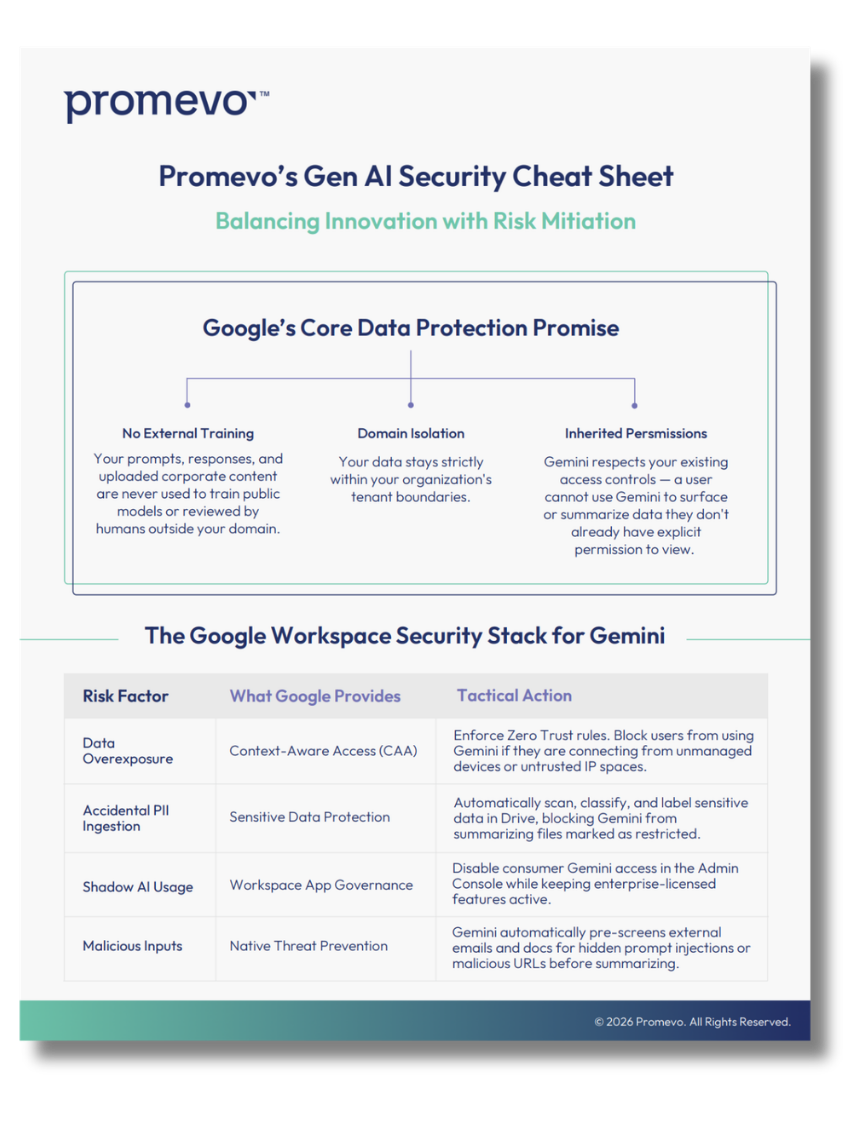
To get the most out of your AI usage, you’ll want to rely on tools and technology ecosystems that are stable and infuse ethics and compliance into their own code and policies. Google, for example, already has a set code of ethics, a reliable approach to security, and offers automations and failsafes that help your team stay in bounds.
What’s more, working with a tech partner like Promevo can help you get the most from Gemini and other AI products from Google, while staying compliant, and training your team along the way. Contact Promevo to learn more about Google’s AI ecosystem and how we can help.
FAQs: AI Policy Performance Monitors
How do you measure AI performance?
AI performance is typically measured using metrics like accuracy, precision, and recall on datasets for the tasks the AI is designed to perform. Different applications will prioritize different evaluation metrics based on what functionality is most important for that use case.
What should be included in an AI policy?
An AI policy should clearly outline guidelines for developing and deploying AI systems responsibly and ethically. Topics like bias mitigation, transparency, accountability, and governance should be addressed.
How can AI be monitored?
AI systems can be monitored through techniques like algorithmic auditing, external oversight boards, and implementing processes to track system performance over time. Monitoring helps ensure AI behaves responsibly and aids in understanding when and why harm might occur.