
5 min read
A Guide to Google Cloud Backups
 Promevo : May 19, 2023
Human error, malware, cyberattacks, hard drive failures, and other incidents can lead to the loss of critical digital information. That’s why having...
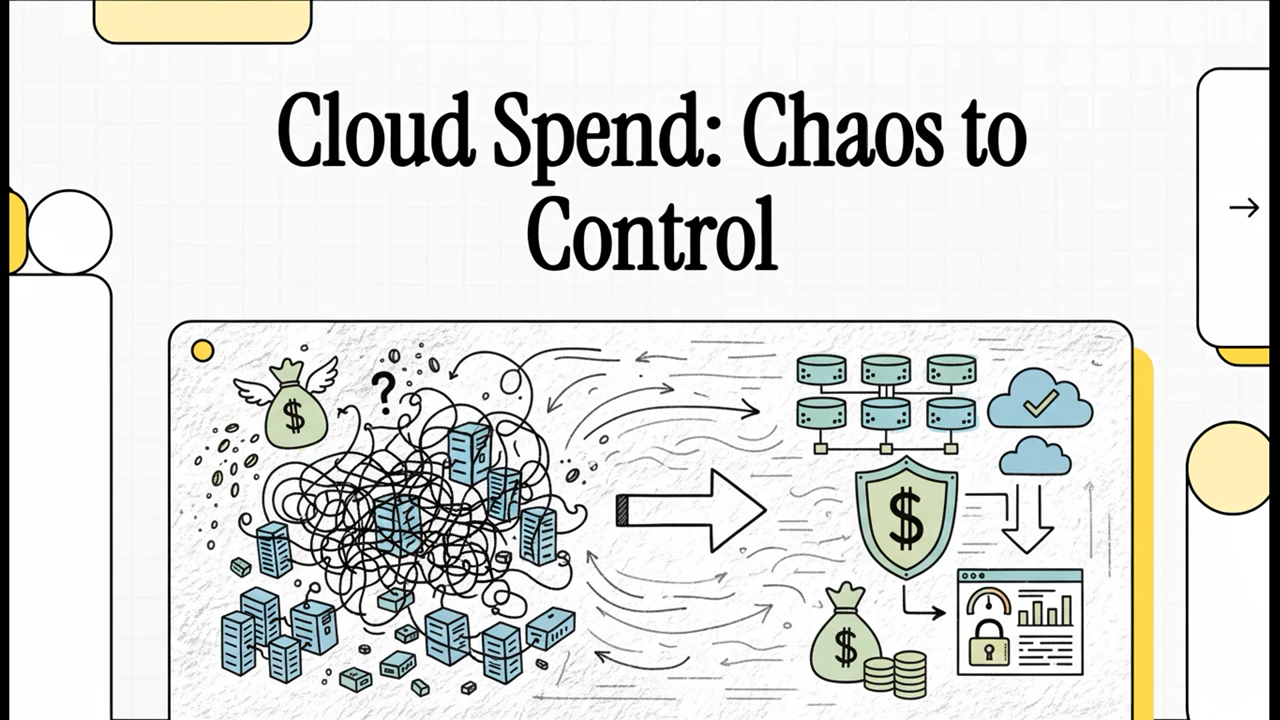
You push a lot of strategic weight when you run cloud operations at an enterprise scale. You juggle sprawling project portfolios, mixed environments, legacy workloads, and teams that work across dozens of business units. Cloud spend management never feels simple because you deal with constant change, budget pressure, and shifting priorities. You also carry the expectation that your cloud footprint should stay efficient without slowing innovation.
You take on all of this while teams launch new applications, experiment with AI services, run data workloads, and expand across regions. Costs grow before you notice the spike. You start chasing invoices or digging through reports instead of shaping strategy.
Strong cloud spend management gives you back clarity and control. You set guardrails, track usage in real time, guide teams toward better decisions, and build predictable spending patterns that your finance team trusts.
This guide gives you structural tips that fit enterprise environments. You see how a FinOps mindset brings your teams together. You also learn how governance, tooling, automation, cleanup cycles, and partner support strengthen your long-term cost strategy.
Enterprises deal with complexity that smaller organizations never encounter. You manage hundreds or thousands of resources, multiple cloud environments, and teams that own their own budgets and workflows. You collect data from many places and need one clear story about spending, efficiency, and forecasting. That complexity creates blind spots.
Common enterprise challenges include:
You want a well-structured cloud spend strategy because it removes noise. You see exactly where money moves. You uncover patterns that help you budget with confidence. You also empower your teams to move quickly without creating waste.
FinOps gives you a cultural and operational approach that aligns finance, engineering, and leadership.
By adopting the FinOps framework, you create shared accountability for cloud costs instead of letting one team carry the burden. You set clear roles and build a reliable rhythm: engineers optimize usage, finance validates spending patterns, and leadership connects cloud investments with measurable business value.
FinOps never works as a set of tools. It works when you build clear expectations and shape a culture where teams treat cloud costs with the same care they give performance or security.
You likely make strong decisions when you see your full cloud footprint. You identify who spends money, what environments drive the spend, and why certain workloads spike or flatten out. You also track the financial impact of every department’s cloud activity.
When you improve allocation accuracy, you encourage responsible usage. Teams adjust behavior because their dashboards show the real impact of their decisions.
Large cloud footprints grow messy over time. You accumulate test environments, snapshots, unused disks, oversized VMs, and dormant services. Each forgotten resource drains your budget. You remove waste when you schedule cleanup cycles and build rightsizing into your operational routine.
This constant cycle keeps your environment lean. You avoid bloat, lower storage fees, and create predictable usage patterns that support finance planning.
You unlock significant savings when you use Committed Use Discounts or Reserved Instances for predictable workloads. You lower long-term costs because you lock in a rate that matches steady demand.
You want accurate forecasting before you make those commitments. You also want to understand your baseline usage around compute, database workloads, and storage patterns. When your forecasting improves, your commitment strategy becomes a major driver of savings.
This approach creates predictable expenses. You capture savings without locking yourself into a plan that limits future growth.
Automation gives you consistent guardrails. You enforce best practices without asking your teams to remember every detail. Automated policies take care of cleanup tasks, budget notifications, scaling rules, scheduled shutdowns, and cost alerts. You reduce waste because automation responds faster than any manual review cycle.
You build a reliable cost culture because automation reinforces the habits you expect from every team.
A Cloud Center of Excellence or similar governance group gives your organization a backbone for cloud management. You provide structure, standards, and guidance that unify the entire enterprise. You also remove guesswork because teams understand the rules and know where to find support.
Strong governance prevents cost surprises. You create consistency across the enterprise and reduce risk.
Cloud spend management evolves quickly, especially when your environment grows or shifts toward AI workloads, new data systems, or redesigned architectures. A partner gives you a broader perspective, validated best practices, and deep experience with patterns that match your environment.
Promevo’s Cloud Health Check gives you a structured assessment of your Google Cloud footprint. You see cost drivers, unused resources, optimization opportunities, security gaps, cleanup recommendations, commitment strategies, and governance improvements. You also get tailored guidance that fits your workloads, team structure, and growth plans.
You strengthen your strategy because you get expert insight, remediation steps, and a clear roadmap that helps you operate with confidence.
Cloud spend management gives you clarity, structure, and long-term control. You gain the financial visibility you need for planning and the operational discipline that helps your teams innovate confidently. You shape an environment that stays efficient as you scale, pivot, or explore new technologies.
If you want a deeper view of your Google Cloud environment, you can partner with Promevo for a Cloud Health Check. You get actionable recommendations, clear forecasting insights, and a path toward a more predictable cloud footprint.


5 min read
Promevo : May 19, 2023
Human error, malware, cyberattacks, hard drive failures, and other incidents can lead to the loss of critical digital information. That’s why having...

4 min read
Promevo : Nov 14, 2024
The decision to migrate your cloud environment can be daunting, and isn’t one that should be taken lightly. Organizations face several challenges,...

5 min read
Promevo : Jun 1, 2023
Google Cloud Platform (GCP) has enabled countless organizations to improve collaboration, streamline workflows, and accelerate growth. But to ensure...