
In the realm of manufacturing, new technologies that reshape whole industries aren’t exactly new — the rise of manufacturing itself was deemed the “industrial revolution,” emphasizing how impactful manufacturing technology was on the global economy and the lives of people around the world. Now, agentic AI is re-shaping how manufacturing looks in many organizations.
According to research from Google Cloud, 56% of manufacturing executives report using AI agents in their organizations, many launching more than ten agents across a variety of use cases. Clearly, agentic AI in manufacturing is already here.
The impact of industrial AI agents and the “agentic factory” they’re helping to create is notable now, and looks primed to grow in the coming years. We’ll explore what agentic AI in manufacturing looks like in practice.
The TL;DR
- Manufacturing is moving beyond basic automation to context-aware, autonomous AI agents that can independently plan and execute complex workflows.
- Routine tasks are handled by AI, freeing human workers to focus on supervision, strategy, and continuous reskilling.
- Breakthrough tools like the Borderless Lakehouse, AlphaEvolve, and Gemini Robotics ER 2 are seamlessly connecting enterprise data, optimizing algorithms, and powering physical robotics.
What is the “Agentic Factory”?
The agentic factory is a factory that’s been redesigned to incorporate AI agents into a variety of workflows. The shift from generative AI and simple automation to agentic AI is a big deal. It means going from pre-programmed scripts and automated machines to context-aware, autonomous problem-solving and agentic systems.
An agentic factory has technology that doesn’t just answer questions, it can independently understand your goals, make a plan to realize them, and autonomously take the actions included in that plan.
How The Agentic Factory is Changing Manufacturing
Agentic AI is causing big changes across industries, and its impact on manufacturing is no exception. Here are some of the main trends shaping what manufacturing looks like in the age of AI.
The Changing Employee Role
Agentic AI in manufacturing inevitably changes how jobs look for human employees. Many of the tasks that used to dominate a human worker’s day can now be handled by specialized AI agents. Instead of spending their time on tedious work, employees will increasingly focus on supervising the AI agents. People will help set goals, clarify instructions, and review agent recommendations, while industrial AI agents will handle much of the so-called “grunt” work.
This shift brings with it a need to train employees in new skills, and make the case for how their role in the agentic factory is still important and valued. Manufacturing companies that embrace agentic AI will want to make periodic training and workshops a regular part of business, to help with the continual reskilling employees will need to keep up with changes in agentic technology.
You’ll also want to make room in the strategy for collecting and incorporating employee feedback to make sure the new order of things is working on the ground — the employees working alongside your agents will have unique insights into how well they’re achieving your intended goals.
Common Use Cases
Manufacturing companies are deploying AI agents in many of the same ways other industries are. For instance, according to Google Cloud’s data, the top two use cases are customer service and experience (56%) and marketing (56%). But there are a few notable ways manufacturers are incorporating industrial AI agents that are more relevant to the agentic factory, such as:
- Quality Control: 54% or manufacturing companies are using agents for quality control. AI agents can inspect products to look for anomalies in shape, size, or surface texture to identify potential issues to address, and alert human workers when they spot a cause for concern.
- Production Planning: 48% are using AI agents to improve production planning. Agentic AI can analyze data about employee shifts, how products are being produced, and company resource usage to look for opportunities to improve production lines. Agents can also ingest data on what’s occurring in real time and react fast. For example, they can automatically schedule maintenance for machines showing signs of wear and tear before they break down, or update production schedules based on real-time orders as they come in.
- Supply Chain and Logistics: 47% of companies say they use agents for supply chain and logistics use cases. AI agents in manufacturing can keep track of all the data about suppliers and shipments in real time, so they know right away when there’s a disruption. They can then act immediately and take steps like placing replacement orders with a different supplier or re-routing orders to another location as needed. They can also run simulations to help the company better prepare and plan for supply chain eventualities, so you have clear backup plans in place that can be executed faster when the need arises.
Risks & Considerations
Embracing AI agents in manufacturing is not without its risks. Google Cloud’s research identified a few main concerns many manufacturing organizations have about converting their factories to be more AI-centric:
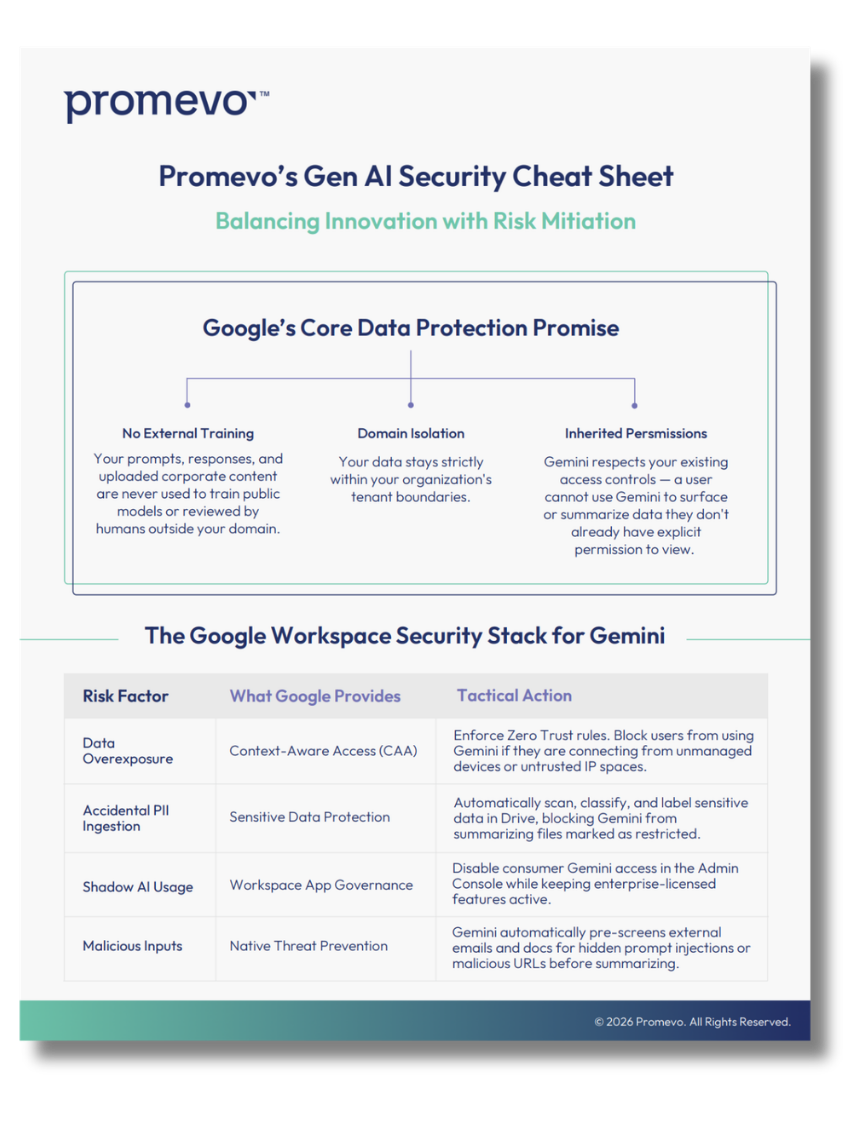
- Data Privacy and Security: 37% of organizations cited data security concerns as a top issue. Indeed, finding the right balance between making your data easily accessible to AI agents, without increasing vulnerabilities to outside bad actors (or rogue actions from the AI agent itself) is something businesses should be keeping top of mind as you develop AI agents. A big part of addressing data privacy concerns is choosing agentic AI tools purpose-built for enterprise, like Gemini Enterprise. Enterprise AI tools are typically designed to treat security and privacy concerns as a top priority.
- Integration Issues: 35% of organizations find integration with existing systems to be a notable challenge when incorporating AI agents into the factory. The more complex your tech stack is (and at enterprise organizations, complexity is basically a guarantee), the bigger a challenge integrations can pose. But there are solutions that can simplify things somewhat, such as Google Cloud’s borderless Lakehouse (read on to learn more about that below).
- Scalability and Performance: At 29% of manufacturing companies, the scalability of AI projects and ability to achieve performance goals are issues of concern. With so many businesses rushing to introduce AI agents without a clear plan, this is a reasonable concern to have. One of the best ways to address this is by partnering with an agentic AI expert that has experience in deploying AI agents and can help you create an effective strategy for implementation.
3 Google Cloud Innovations Fueling the Agentic Factory
We’re still in the early stages of agentic AI in general, and the agentic factory in particular. But with each year, new innovations in the space are ensuring that manufacturing companies have even more opportunities to launch agentic AI projects that can make a real difference in your results.
Some of the notable recent innovations in the realm of Google Cloud and Gemini include:
-
Borderless Lakehouse
One of the biggest challenges to implementing agentic AI effectively is getting your data in order and ensuring your industrial AI agents can access it seamlessly. Enterprise organizations have their data spread out across so many different tools that making sure AI agents can find and act on all the information they need is a crucial early step in building an agentic factory.
Google’s new borderless data Lakehouse addresses that exact issue. The borderless Lakehouse connects all of an organization’s operational systems and SaaS (Software-as-a-Service) application clouds, so your agents can tap into relevant data where it’s located, without needing to move or copy it. That enables Gemini Enterprise to query all data immediately, without any lag and without having to tackle the onerous project of building data pipelines.
The borderless Lakehouse also makes use of Google Cloud’s Knowledge Catalog to provide agentic context, so agents can gain a unified view of your organization across all your operational and application clouds and factor that into their analysis and decision making. And with Google Cloud’s Conversational Analytics API, employees at any skill level can use natural language to ask agents questions and get clear answers based on your data.
-
AlphaEvolve
Agentic AI is especially useful for tackling coding and algorithmic problems. Google Cloud’s AlphaEvolve is an AI agent designed for code optimization. Organizations across disciplines — from logistics to semiconductors to genomics and high performance computing, to name a few — can use it to discover and implement the best algorithms and coding solutions for the problems they face.
In the realm of manufacturing, that can include use cases like creating more accurate deterministic models for optimizing the global supply chain. When a factory has a solid model for understanding and forecasting supply chain issues better, it improves planning and helps the company prepare for potentialities that humans may have a hard time predicting. It can also be used for tasks like warehouse routing, helping teams gain better recommendations for how to get products to their end location faster while using less fuel and human labor, and putting less wear and tear on fleets.
-
Gemini Robotics ER 2
While all the other innovations of agentic AI in manufacturing have an important role to play, combining AI agents with robotics is the kind of technological leap that could truly revolutionize the agentic factory. Gemini Robotics ER 2 represents an important step in that direction. Google calls Gemini Robotics ER 2 its most capable “embodied reasoning” model. It enables robots to communicate with people, understand the physical world around them through visual feeds, and execute multi-step tasks.
It can also connect to Google Search, allowing for independent problem solving. And it can track its own progress and adapt to changes in a situation based on continuous video feeds. Gemini Robotics ER 2 can also support multi-robot collaboration — meaning two different types of robots can hand off tasks to one another based on the strengths of each.
This presents powerful possibilities for putting industrial AI agents to use in more physical roles in factories. They can become a key part of assembly lines, aiding humans in ways that lighten their load and make the work faster and easier.
Build Your Own Agentic Factory with Google Cloud and Promevo
All of these trends and innovations are exciting and you’re probably ready to get started, or to increase the number and type of AI agents working in your factory. When adding new AI agents into your processes, it’s crucial to do it right.
Promevo has extensive experience helping companies introduce Gemini and Google Cloud into their organizations the right way. Our Gemini Enterprise Accelerator helps businesses take a thoughtful, strategic approach to developing and implementing AI agents, which leads to higher odds of success.
 We also offer custom AI application development to help companies design AI agents that actually address your primary needs. Promevo has also recently established Google Cloud Manufacturing Competency, making us uniquely suited to help manufacturing organizations interested in Google Cloud and Gemini with their agentic AI projects.
Agentic AI has a huge role to play in the future of manufacturing. As you work to transition your organization toward the agentic factory, you want to take the best possible approach to achieve success. Working with a skilled, experienced partner like Promevo is how you get there. Set up a consultation to get started.